- The Harlem Neighborhood Block Association
- Posts
- Harlem's Beaux Arts Ball
Harlem's Beaux Arts Ball
Carnival meets masquerade meets camp

HNBA Writers
February 25, 2026 • Estimated Reading Time: 1 minute

The 1942 Harlem Beaux Arts Ball at the Savoy Ballroom. Weegee, International Center of Photography
Harlem’s Beaux Arts Ball
The Harlem Art Center was the first beneficiary for the fundraising extravaganza of Carnival, Artistry, Queer Life and Cosplay at Harlem’s Savoy Ballroom
In February of 1941, the Citizens Sponsoring Committee of the Harlem Community Art Center on West 116th Street held its first “Beaux Arts Ball” at Harlem’s Savoy Ballroom, the legendary dance hall and concert venue that was located at 596 Lenox Avenue, between 140th and 141st streets.
Mollie Moon, a social worker, activist, fundraiser and patron of the arts, conceived of the ball to support the struggling arts center that had opened in 1937 with funding from the Federal Art Project.
The Beaux Arts Ball wasn’t an ordinary ball. Likely inspired by the attention given the impressive costumes at the 1931 Architecture League’s Beaux Arts ball in New York (itself a version of the Paris École Nationale Supérieure des Beaux-Arts’ famous ball), Moon, with her foot in radical art circles and familiarity with European cabaret from time spent in Berlin, conceived of Harlem’s version as a grand “cosplay” inspired by the carnival traditions of the Caribbean and Harlem’s gay culture, according to Moon’s biographer, Tanisha C. Ford,
The exciting, transgressive ball had made such a splash that a year later, the March 13, 1942 event was announced in The New York Times. Sadly, it was not enough to save the Harlem Arts Center, which closed that same year as the Federal Art Project had lost its funding.
The ball, however, was too exciting to die. Mollie Moon took on fundraising for the National Urban League and repurposed the Beaux Arts Ball to benefit that organization. The Urban League was not the wild, quirky organization that the arts center had been and the ball morphed into a more elite, more traditional costume ball drawing New York’s wealthy black community and progressive whites. By 1948, in keeping with its changing character, the ball went downtown leaving the Savoy for Rockefeller Center before eventually settling at the Waldorf Astoria.
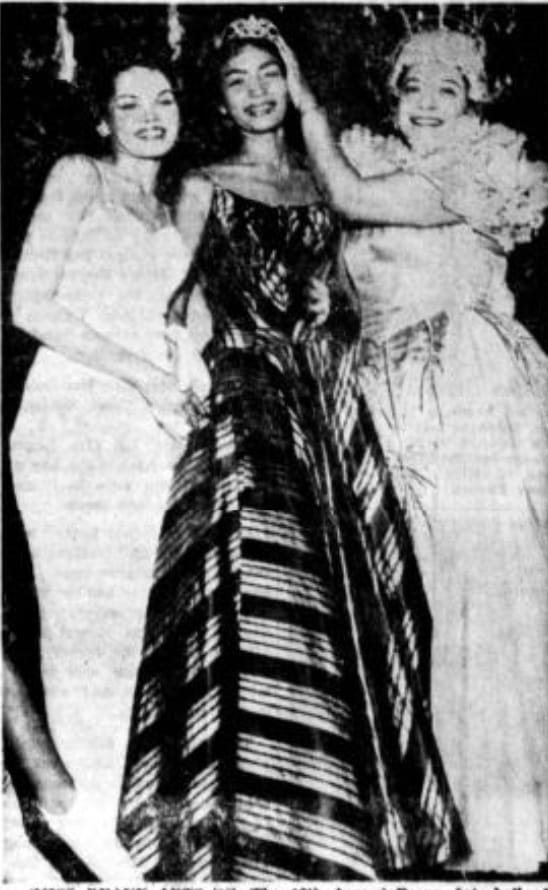
Mollie Moon, right, and a previous Miss Beaux Arts Ball crown the new winner at the 1956 annual ball.
See photos from the Beaux Arts Ball at the Institute of Contemporary Photography website here and learn more about Mollie Moon in Our Secret Society: Mollie Moon and the Glamour, Money, and Power Behind the Civil Rights Movement by professor Tanisha C. Ford.
ER/KD
Reply